
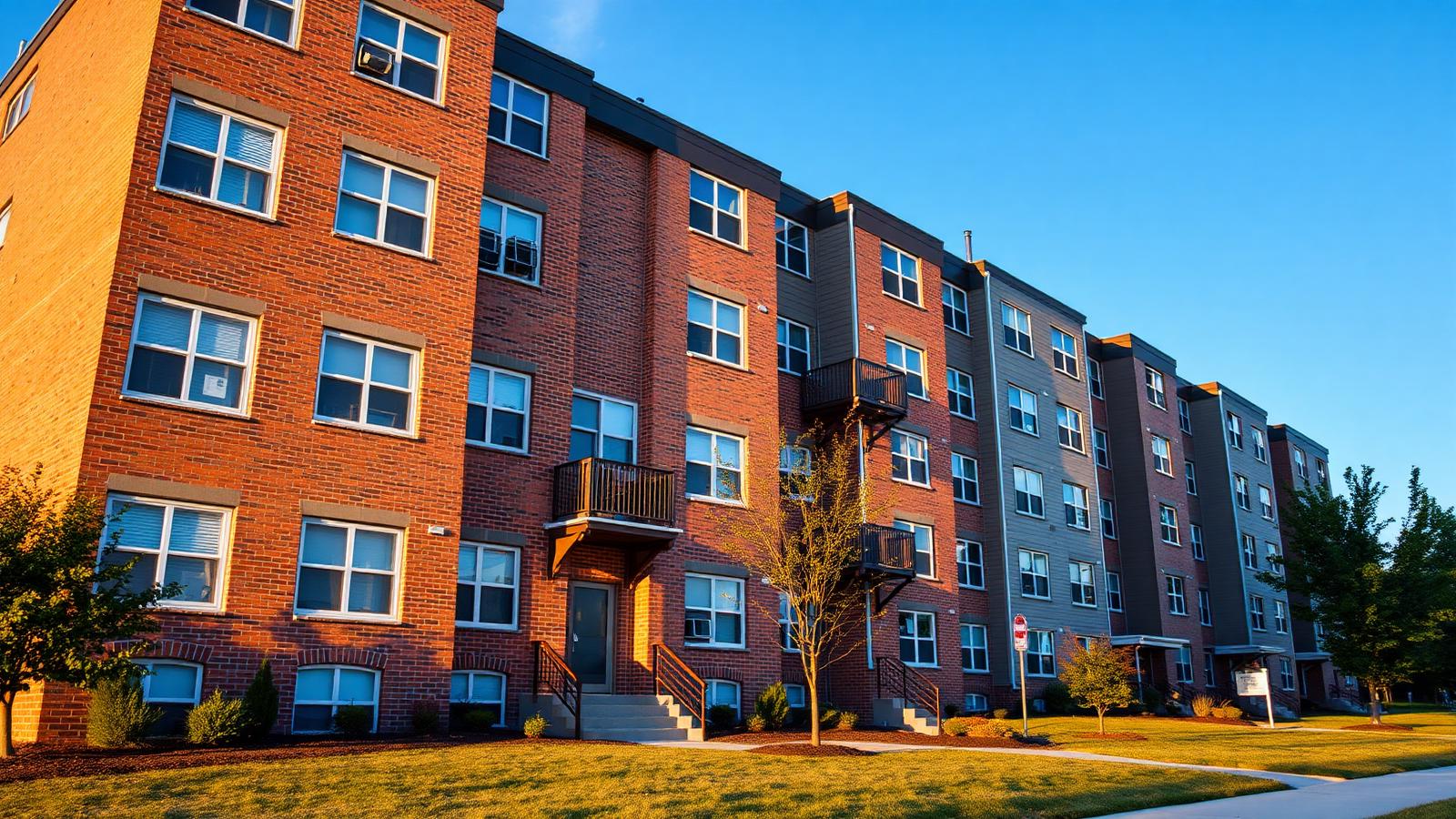
RAD conversion is the most significant tool PHAs have for addressing the capital crisis in public housing. It works. But executing a RAD conversion as a PHA is different from executing one as a private owner or a nonprofit developer. The PHA is the applicant, the current owner, often the future owner or co-owner, the subsidy administrator, and the entity responsible for resident outcomes — all at once. The board has to approve a fundamental change to how the agency operates. Staff have to manage the conversion while still running the daily agency. Residents and community stakeholders have questions. HUD has expectations for PHA-led conversions that don't apply to other applicants. The deal has to work financially, operationally, and politically — at the same time.
TFG works with PHAs on RAD conversions — from the initial portfolio analysis through HUD approval, financing, closing, and construction. We've helped large metro authorities convert hundreds of units across phased portfolios. We've helped small rural PHAs convert a single property when it was the only realistic path to preservation. We know what the PHA side of a RAD deal looks like because that's where we sit. Not on the developer side. Not on the syndicator side. On the PHA side — where the decisions are hardest and the stakes are highest. For the broader RAD service offering across all owner types, see our RAD Conversion Consulting page.
RAD for PHAs Is Different
A private owner converting a property under RAD has one job: close the deal. A PHA has four — and they pull in different directions.
Board dynamics and approval
PHA boards are public bodies. Converting public housing to the Section 8 platform requires board resolutions, public notice, and — often — contentious public meetings. Board members who don't understand RAD financing may resist the conversion. Members facing election pressure may delay the vote. We help EDs build board presentations, model financial scenarios in language board members actually use, and manage the approval process so the conversion doesn't stall in committee for nine months while financing assumptions go stale.
Staff capacity
Most PHAs — especially smaller ones — don't have a development department. The ED, the CFO, and one or two program staff are running the entire agency. Adding a RAD conversion to that workload without external support means either the conversion stalls or daily operations suffer. Neither outcome is acceptable. TFG functions as your development capacity for the duration of the deal — handling the technical and regulatory work so your staff can keep the agency running, REAC inspections passed, and PHAS scores intact.
ACC and subsidy mechanics
When a PHA converts public housing to RAD, the Annual Contributions Contract changes. Operating subsidy calculations shift. Capital Fund eligibility changes for the converted units. These subsidy mechanics are PHA-specific — a private developer doing a RAD deal doesn't deal with ACC amendments or Capital Fund implications. We manage the transition and make sure your overall subsidy position isn't quietly harmed by the conversion. The HAP rent has to make sense not just for the converted property but for the agency's full financial picture.
Resident and community politics
Public housing residents have organized representation — resident councils, tenant associations, sometimes political allies on city council or in the state legislature. Converting public housing to Section 8 triggers real anxiety, even when the resident protections in the RAD Notice are strong. "Are you privatizing public housing?" is the question every ED hears. We help you answer it honestly and specifically — what changes, what doesn't, what residents keep, and where the protections sit in the actual program rules.
What We Do for PHA RAD Conversions
The work spans the full life of the deal — from the first portfolio screen to the first month of operations under the converted platform.
Portfolio analysis and property selection
Not every property in your portfolio should convert at the same time — or at all. We analyze your full inventory and identify which properties are RAD candidates based on capital needs, operating economics, financing feasibility, and strategic priority. Then we sequence the conversions to manage HUD processing timelines, financing market windows, and your staff's bandwidth. For large PHAs, we build a multi-year conversion pipeline. For small PHAs, we identify the single conversion that makes the most impact and protect against spending three years on a deal that was never going to pencil.
Financial structuring for PHA-led deals
PHA RAD deals have specific financing dynamics. Your operating subsidy history affects the initial HAP rent. Capital Fund commitments may be part of the financing stack. The PHA may be contributing land, demolition credit, or reserves as part of the capital structure. We build financial models that account for PHA-specific revenue and cost assumptions — not generic multifamily underwriting — and structure deals that work within your agency's actual financial reality, including the Capital Fund forecast for the units that aren't converting.
HUD application and Conversion Plan
We prepare the RAD Conversion Plan and the supporting documentation HUD wants to see. For PHAs, that means demonstrating the conversion serves agency-wide strategic objectives, that resident consultation has been conducted properly, that the financing structure is feasible without further HUD authority, and that the PHA has the capacity — directly or through consultant support — to execute. We know what each field office looks for in a PHA application and we build packages that get approved without three rounds of conditions.
Developer and financing partner coordination
Many PHA RAD deals involve a development partner — a nonprofit or for-profit developer who brings LIHTC experience, construction management, and equity access. We help PHAs evaluate and select development partners, negotiate partnership terms, and make sure your interests are protected in the ownership structure. The PHA shouldn't be a passive participant in its own deal. Operating reserves, replacement reserves, cash flow splits, refinancing rights, and the disposition of the property at Year 15 all have to be negotiated — not accepted as the developer's standard form.
Resident consultation and communication
RAD requires formal resident consultation before HUD submission. For PHAs, resident engagement is more than a regulatory checkbox. We help design communication strategies that are honest, clear, and responsive to actual resident concerns. We prepare materials in plain language. We help EDs and board members handle the hard questions at public meetings — about choice mobility, about long-term affordability, about what happens if the new owner sells in 20 years. Residents who feel respected during consultation become advocates. Residents who feel managed become opponents.
Closing and post-conversion support
RAD closing pulls together HUD, the lender, the syndicator if LIHTC is involved, legal counsel, and the PHA's own administrative processes. We manage the transaction through closing — and then help establish post-conversion operations. New subsidy reporting under PBRA or PBV. Compliance setup for the new platform. Asset management protocols. Capital Fund accounting for the units that remain in the ACC. The day after closing isn't the end of the work; it's the start of operating under a different rulebook.
Ready to Explore RAD for Your PHA?
A 30-minute call with a senior advisor — confidential, no obligation. Bring your portfolio and your questions.
Small PHAs and First-Time RAD Conversions
Small PHAs — managing 100 to 500 units — face a specific set of RAD challenges. The staff is lean. The board may have limited exposure to complex real estate transactions. The financing market is less interested in small deals because the transaction costs look similar to a large deal but the fees are smaller. Finding a development partner willing to take on a 60-unit RAD conversion in a small market isn't always easy. None of that is news to a small-PHA ED. It's the daily reality.
But RAD often matters more for small PHAs than large ones. A small agency with a single aging property and no capital reserves has fewer alternatives. RAD may be the only realistic path to preserving the building. We've worked with small PHAs on exactly these deals — structuring conversions that are financeable despite small scale, finding partners willing to work in smaller markets, and walking first-time EDs through a process they have never done before.
We don't treat small PHAs as smaller versions of large PHAs. The dynamics are different. The financing is different. The board dynamics are different. The approach has to be scaled to the agency's capacity and the deal's actual economics — not borrowed from a metro playbook that assumes a development department and a list of developer relationships your agency doesn't have.
Large PHA Portfolio Conversions
Large PHAs converting hundreds or thousands of units face a different challenge: sequencing and coordination. Which properties go first? How do you manage multiple active RAD applications at different stages? How do you coordinate with multiple development partners, lenders, and syndicators across a phased portfolio? How do you keep board and community support sustained over a multi-year conversion program when the political environment shifts twice a year?
We provide portfolio-level RAD management for large PHAs — building the conversion pipeline, managing the sequencing strategy, coordinating across HUD submissions, and making sure each phase builds on the lessons of the last instead of repeating its mistakes. This is project management inside a regulatory and financing framework, and it requires someone who understands both the deal mechanics and the institutional reality of a large public agency.
Let's Talk About RAD for Your Housing Authority
A senior advisor, your portfolio, and a candid conversation about what converting actually looks like for your agency.